
Goethean Science
And why we need it now more than ever.

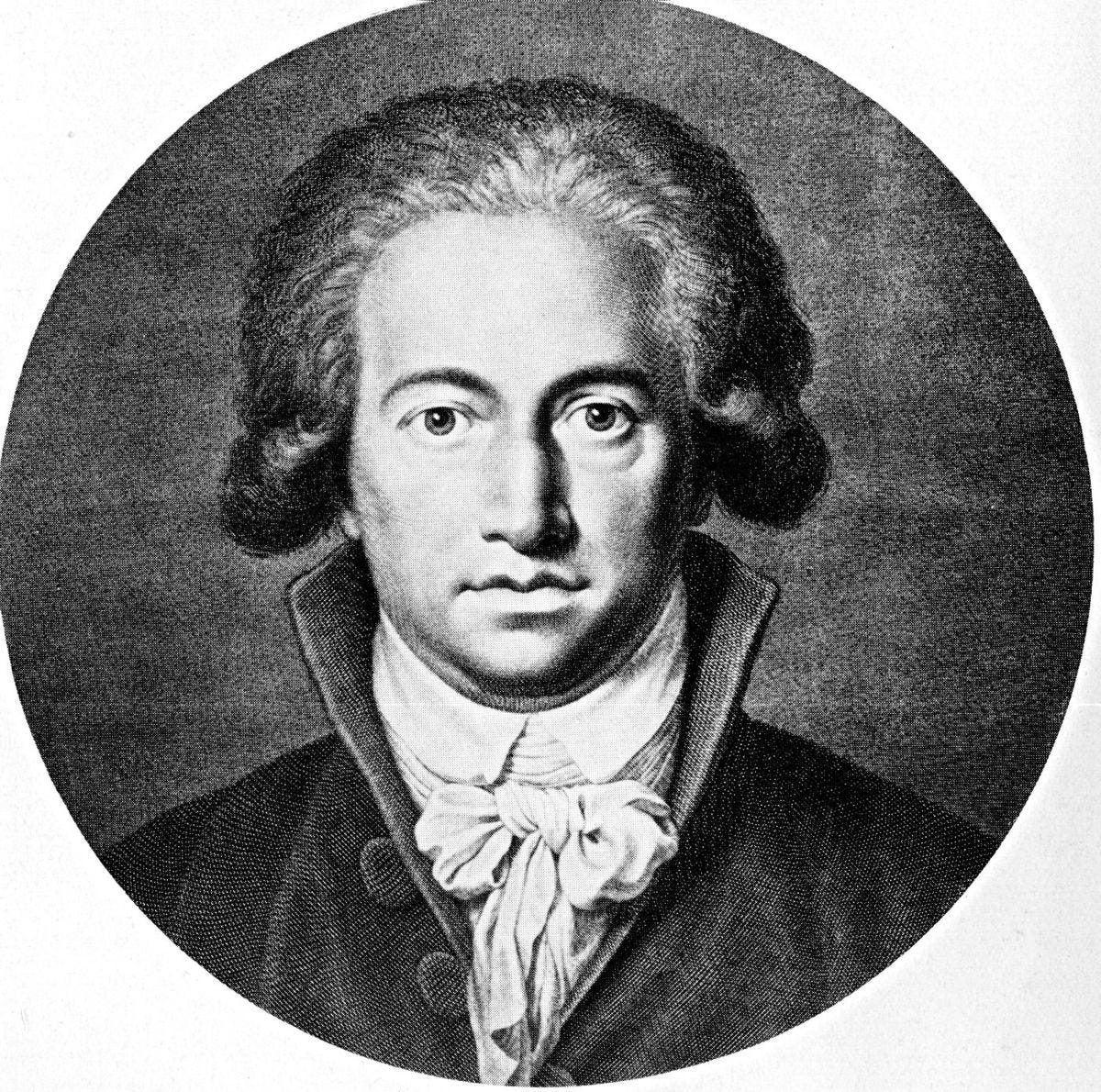
Johann Wolfgang von Goethe:
Today, Johann Wolfgang von Goethe is remembered as a (if not the) titan of German literature - easily standing among the greatest of that language’s greatest literary geniuses. Goethe bursted on to the scene in 1774 with his surprise hit The Sorrows of Young Werther (Die Leiden des Jungen Werthers), an epistolary novel which simultaneously captured the Zeitgeist of the late Eighteen Century while also laying the foundation of a new æthetic - that of Romanticism - which would define the following century. Werther was such a success that it created a sort of sentimentalist youth culture, the first of its kind - people were dressing up like Werther, wandering about in pastoral settingsl; there were Werther tea sets, porcelain, prints, and various stage versions and even an opera. It is even said that Werther inspired a series of suicides that mirrored that of Werther’s at the end of the novel1.
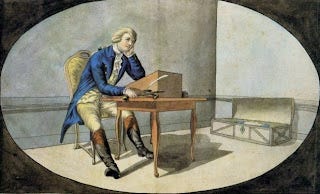
From then on, Goethe enjoyed a celebrity, a mystique, both in his life and posthumously, with few parallels. Cultural history is full of artists of their time who came and went - of Meyerbeers, of Salieris - lauded as greats in their day and subsequently forgotten about. But this has not and never did happen with Goethe: very few, before or since, have ever doubted his importance. If the English language has its Shakespere, Germany has its Goethe - Goethe’s breadth of work, his poems, novels, and treatises, represent the German language at its very best. His artistry is both æsthetic, lyric, and philosophical. Goethe’s Faust2, considered by many to be his magnum opus, is equal parts high drama in verse, comedy, philosophy, and dramatic theory.
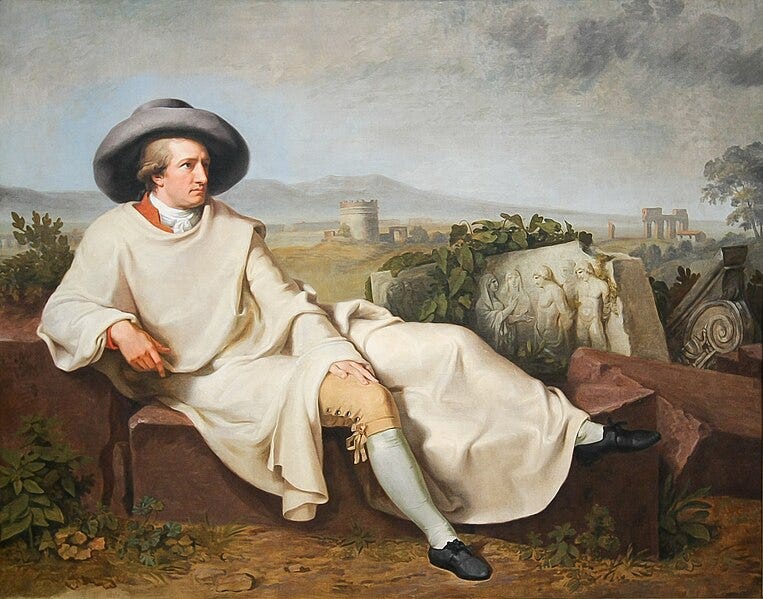
The Polymath and Natural Philosophy:
Goethe, after all, like the great intellectual figures of his time, was a polymath. Although such a thing does not really exist today - or at least is no longer taken completely seriously - the Renaissance men (and women!) of the Eighteen Century would have a profound impact on the evolution of modernity. Americans, though most may not be aware of this, are well familiar with the polymath: our country was founded by them. Benjamin Franklin, besides being a politician, political philosopher, diplomat, and publisher, was also a scientist - he discovered electricity. Aaron Burr - mostly known today for his fatal rivalry with Alexander Hamilton - visited Weimar and met Goethe several times. Thomas Jefferson, perhaps the smartest and most well-read man of his day, besides writing both the Declaration of Independence and The Constitution, read widely in both English and French, and had a passion for astronomy, botany, meteorology, architecture, and statistics. His neoclassical residence (which he designed) at Monticello, near Charlottesville, feels less like the manor house of a Virginian gentleman farmer, than it does a custom built laboratory - a physical and metaphysical observatory.
Rather than being merely a dabbling in multiple areas, the work of the polymath implies a level of disciplinary synthesis. Underlying all of the polymath’s intellectual endeavors, is a deep intuition-sense of applied interrelatedness. According to the scholar Waqad Ahmed in his in depth study on the subject The Polymath: Unlocking the Power of Human Versatility, “The polymath not only moves between different spheres or different fields and disciplines, but seeks fundamental relations within those fields, so as to give a unique insight into each of them”3. For example, Thomas Jefferson’s passion for architecture was not just a disciplinary interest in itself, but was an smaller, more intimate extension of his life’s work: the creation of a new society organized along a rational, liberal Enlightenment framework. His architectural endeavors, just like his political endeavors, represent two sides of the same utopian project. Likewise, it is not difficult to see how for Leonardo da Vinci, the quintessential Renaissance polymath, his interest in art, anatomy, engineering, and architecture were deeply connected. Underlying these pursuits is a deep sense of humanism - an ultimate faith in human endeavors and human nature as “the measure of all things”.
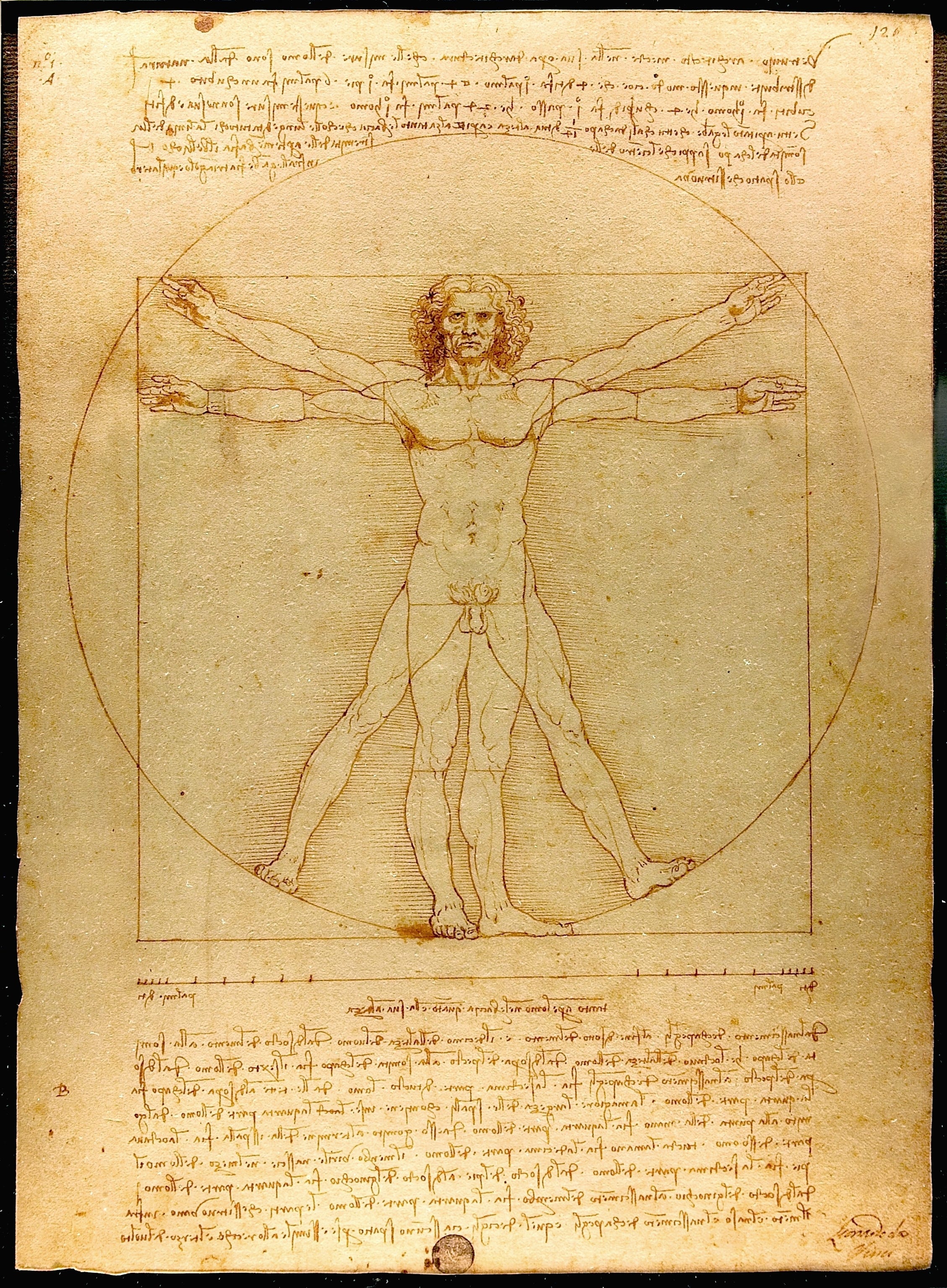
The science of the polymath is less of a ‘science’ as it has been conceived since the Nineteenth Century as a rigid, specialized, and professionalized discipline, but rather is best understood in terms of a comprehensive, all encompassing ‘Natural Philosophy’. To some, natural philosophy is to modern science what alchemy is to modern chemistry - a rudimentary, archaic, and profoundly un-scientific ancestor.
And yet, the foundational works of the modern scientific project were conceived not as pure scientific demonstrations but as natural philosophical treatises. Isaac Newton’s magnum opus, the founding work of classical physics published in 1687, was after all, The Mathematic Principles of Natural Philosophy. Newton’s late-life departure from physics towards meta-physics - towards spirituality, mysticism, philosophy - typically viewed as a bizarre footnote to his accomplishments and contributions if not completely ignored, makes much more sense when viewed in this polymathic context.
Botany, Taxonomy, and Vitalism:
It is important to note that Goethe’s work, both literary and scientific, is endowed with a pervasive sense of vitalism - a belief in a universal Life Force (die Lebenskraft), present in all living things, by which the metaphysical world of idea-forms interfaces with the physical, material world. Goethe once asserted, for example, that “the corpse is not the whole creature”. This concept is the foundation of Goethe’s sublime sense, his Romanticism, and his sense of natural beauty. But Goethe’s greatest, most eloquent articulation of this idea is found, not in any of his scientific works, but in his literary work - expressed not mechanically, but poetically, through Werther, his alter-ego: “As I lie close to the Earth, a thousand unknown plants are noticed by me: when I hear the buzz of the little world among the stalks, and grow familiar with the countless indescribable forms of the insects and flies, then I feel the presence of the Almighty, and the breath of universal love which bears and sustains us… [if only] I could describe these conceptions, could impress upon paper all that is living so full and warm within me, that it might be the mirror of my soul, or the mirror of infinite God!… I sink under the weight of the splendor of these visions”4.
Goethe was fascinated by the world of plant life and morphology. Goethe published a number of botanical works, most notably his Metamorphosis of Plants5, for which he is credited with the discovery of homogeneity in plants - of equivalent parts/organs in different, distinct species - through his study of similar photosynthesis processes in different plant leaves (Goethe loved his microscope). “While walking in the Public Gardens of Palermo, it came to me in a flash that in the organ of the plant which we are accustomed to call the leaf lies the true Proteus who can hide or reveal himself in vegetal forms”. Since homogeneity serves as the primary, most visible link between various species6, it can be said that Goethe made a small but nevertheless appreciable contribution to Charles Darwin’s Theory of Evolution - that epochal idea.
And like Darwin’s world of Natural Selection and Survival of the Fittest , Goethe’s vision of nature could be both beautiful and terrifying. Werther, feeling he sees the natural world for what it is, laments that “the most innocent walk deprives of life thousands of poor insects… my heart is wasted by the thought of that destructive power which lies concealed in every part of universal nature… nature has formed nothing that does not [eventually] consume itself, and every object near it”7.
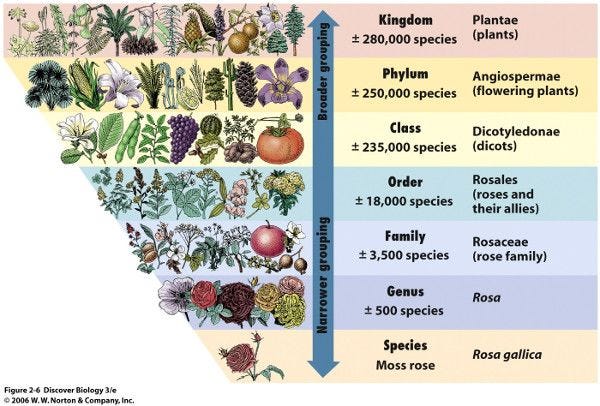
Although he read the vogue of Eighteenth Century scientific literature in general, and botany in particular, such as Carl Linnaeus’s Fundamenta Botanica and Termini Botanici8, Goethe rejected what he saw as the burgeoning scientific establishment’s attempt to draw a distinction between mankind and nature. In his History of My Botanical Studies9, a botanical autobiography of sorts, Goethe recalls the following anecdote which occurred during a journey to the spa town of Karlsbad in Bohemia (now Karlovy Vary in Czechia). On the road, Goethe encountered a young boy who could identify every flower and plant by its scientific, taxonomic name. “Handing them into my carriage on the spot”, Goethe recounts, “and, in the manner of a herald, announcing the Linnaean designation, both genus and species, with happy conviction, if sometimes the wrong pronunciation… In this way I attained a new relationship to open, splendid Nature, while my eyes enjoyed her wonders, and at the same time the scientific designations of the individual plants reached my ears as though from a distant study chamber”10.
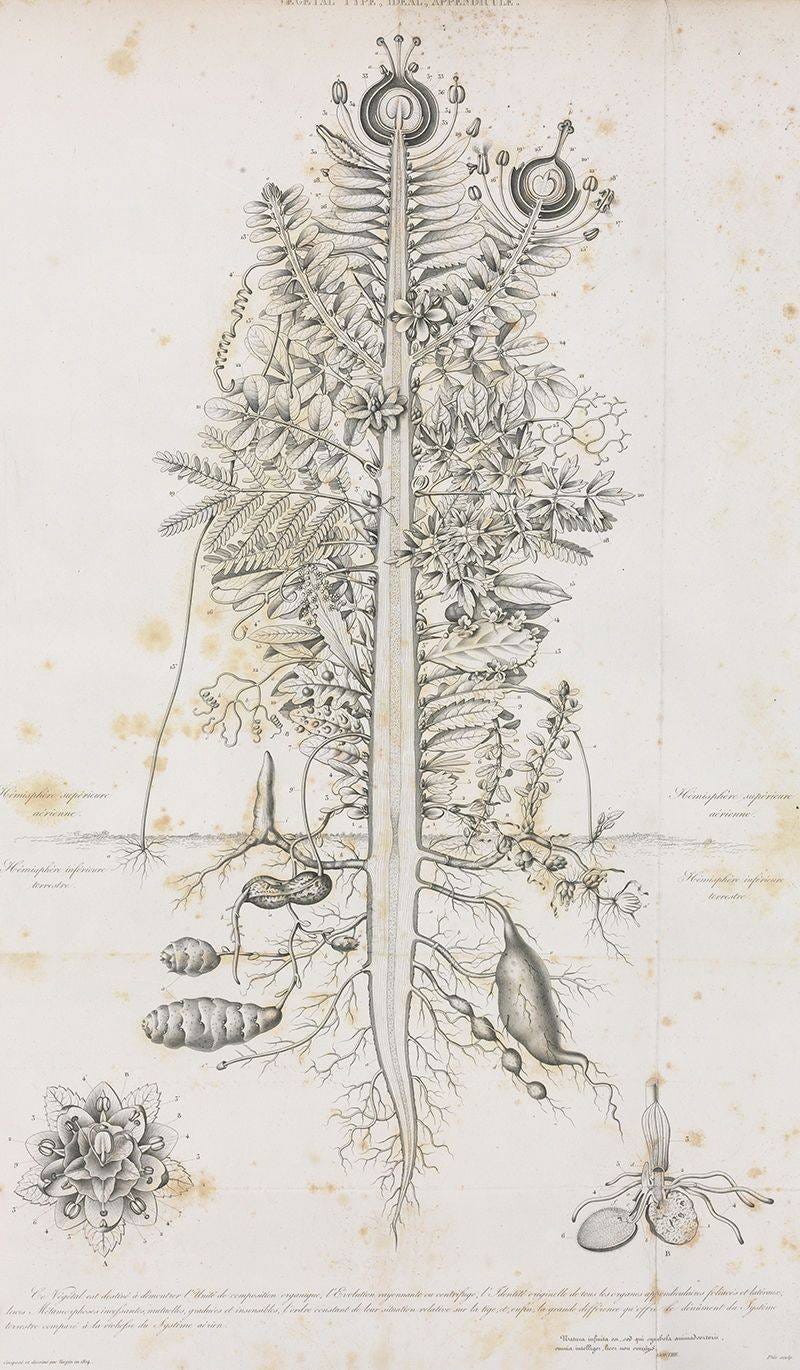
Goethe’s interest in plants was marked by a peculiar obsession, a quest, if you will for a mythical holy grail of botany: The Urpflanze - or, “the concentrated singularity of all possible plants”11. From who or what this peculiar, almost proto-Darwinian idea originated, how it came to be planted in his head, no one is really sure, although the idea of form as a concept is clearly Platonic. Nevertheless, in the Urpflanze, Goethe saw an irresistible opportunity to bypass the Linnaean problem entirely. “Here”, Goethe writes at the Padua Botanical Garden during his travels in Italy on September 27th, 1786, “where I am confounded with a great variety of plants, my hypothesis that it might be possible to derive all plant forms from one original plant becomes clear to me and more exciting… only when we have accepted this idea will it be possible to determine genera and species exactly”. Goethe, ever a product of his own creative fancies, often found himself taken aback, carried away by the strength of his own imagination. “The primal plant is going to be strangest creature in the world”, Goethe says in contemplative certainty, “with this model and the key to it, it will be possible to forever go on inventing plants and know that their existence is logical”. Ten years later, visiting another botanical garden in 1797, Goethe was still at it: “seeing such a variety of new and renewed forms, my old fancy suddenly came back into mind: among this multitude might I not discover the Urpflanze? There certainly must be one. Otherwise, how could I recognize that this or that form was a plant if all were not built on the same basic model?”12.
Philosophy, Science, and Perception:
Goethe’s opposition to what he saw as the Linneaen project - what he saw attempt as an attempt to impose artificial barriers on a monistic, dynamic natural system which includes human beings - falls in line Goethe and Romanticism’s broader critique of Kantian transcendental idealism. Kantianism underpins the Enlightenment as an intellectual project, allowing the observer to distance himself from intellectually hazardous prejudice and superstition. Kant, as it is said, is to philosophy what Copernicus is to astronomy.
Central to Kantian theory is an a priori separation between the internal consciousness of the observer, the self, and the external world of observed objects. The implication is that sensory experience does not represent substantial experience, since a thing-in-itself (Ding an sich) must exist independently from the perception of an outside observer. For example. to use the favored, highly versatile analogy of philosophy professors, a person can see a chair, can feel a chair - can, in other words, perceive a chair to the best of his or her ability - but will never be able to understand the chair on a formal, essential level. What can follow (and here is the critique Romanticism poses) is profound philosophical detachment from the external world, since its nature, as well as the sensational existence, comes into doubt when, as demonstrated by Hume, it is treated in purely empirical terms and taken to its farthest conclusions.
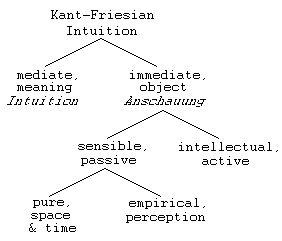
However, Goethe’s conception of sense and perception could not have been more different. As far as Goethe was concerned, Kant had it backwards13. In his Maxims14 and Reflections, Goethe concludes that “the human being knows himself only insofar as he knows the world; he perceives the world only in himself, and himself only in the world… every new object, clearly seen, opens a new organ of perception within us”15. In other words, how could perception possibly be separated from sensation, if perception itself seems to be constructed sensationally in the first place? Thus, the Goethean project as a whole could be interpreted as an answer to this very Kantian question, if not a rebuke of its deepest-held, most fundamental assumptions.
It thus comes as no surprise that Goethe’s other scientific interest, besides botany, lay in the science of perception itself - of optics. It is the study of light and shadow where Goethe’s physical morphology and metaphysical framework converge most succinctly. Besides Faust, Goethe considered his theory of light, shadow, and color to be his greatest work. Unlike Newton’s Optiks16, for example, Goethe’s objective was not in mechanical understanding of light and color, but rather of perceptual understanding - or, as Daniel Wahl described it, “[Goethe’s] phenomena-based rather than concept-based science”17. According to Goethe, “the highest is to understand that all fact is really theory. The blue of the sky reveals to us the basic law of color. Search nothing beyond the phenomena, they themselves are the theory”.
Light, Darkness, and Color:
In the spirit of such a statement, Goethe’s Theory of Colors18 does not involve or posit any particular theory, but rather what the philosopher Arthur Schopenhauer in his own color theory called “a systematic presentation of facts”19. Because the essence of Goethe’s ‘theory’ is phenomenological and not theoretical in nature, it is difficult to argue with his conclusions - which, at first glance, are merely a list of self-evident statements and propositions. But here Goethe is doing far more than merely stating the obvious. Rather, he is constructing his understanding of the world from the ground up based purely on intuitive sensual (in this case visual) experience. Goethe’s Theory thus takes the form of easily replicable experiments - which he encourages the reader to do themselves.
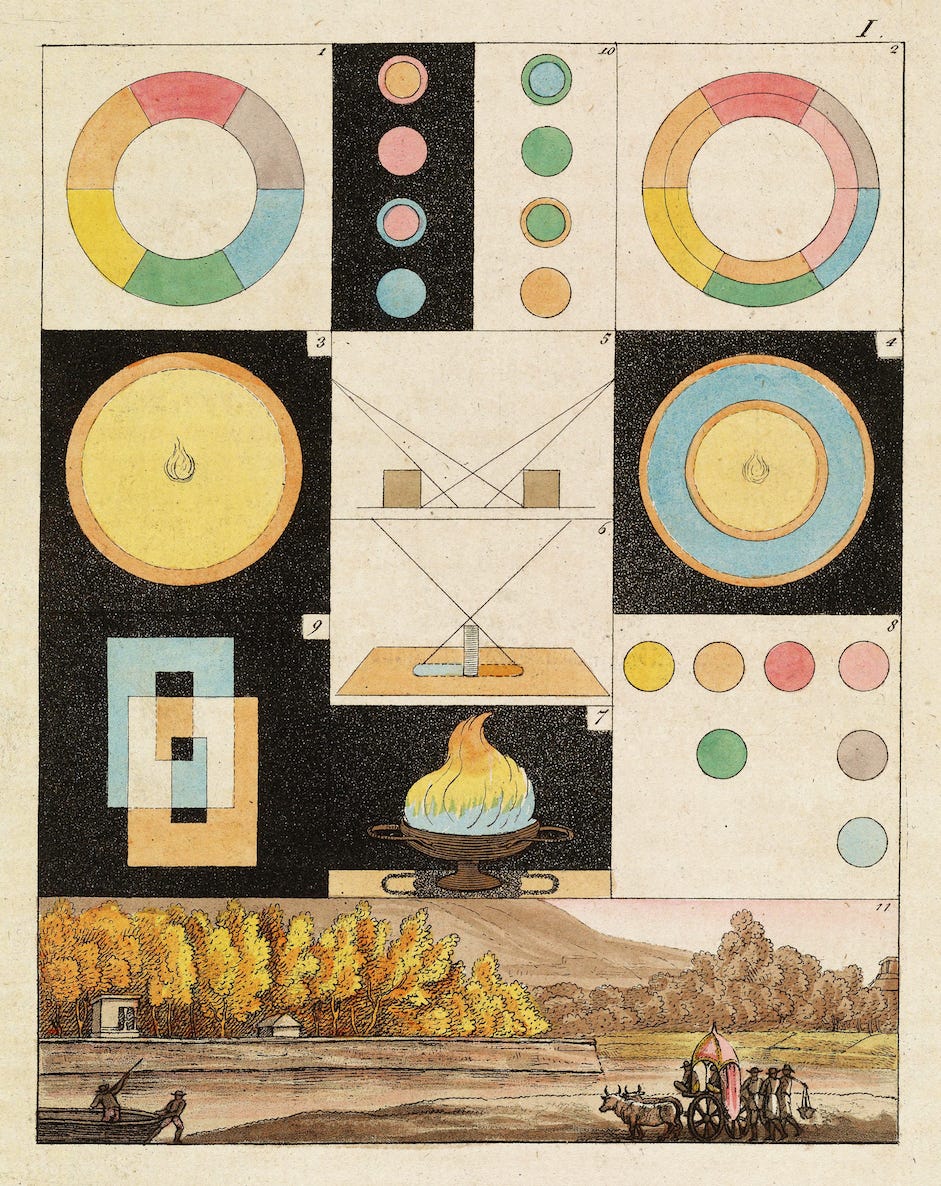
In Theory of Colors, Goethe’s treatment of color (as Ding an Sich) is never kept far from the physiognomy of the human observer - the organ by which color is perceived, the eye - “The foundation of the whole doctrine”. Darkness is disorienting because, according to Goethe, when the eye is deprived of light “the organ is abandoned to itself; it retires into itself… that stimulating and grateful contact is wanting by means of which it is connected to the external world, and becomes part of a whole”20. He closely considered the connection between color and human emotion (color as stimulus) and took it very seriously (this, by the way, is a profoundly un-Kantian endeavor). Red-yellow “produces extreme excitement… a yellow-red cloth enrages animals”, while red-blue produces “a restless, susceptible, anxious impression”, before going on to describe the “Effect of color with reference to moral associations”21.
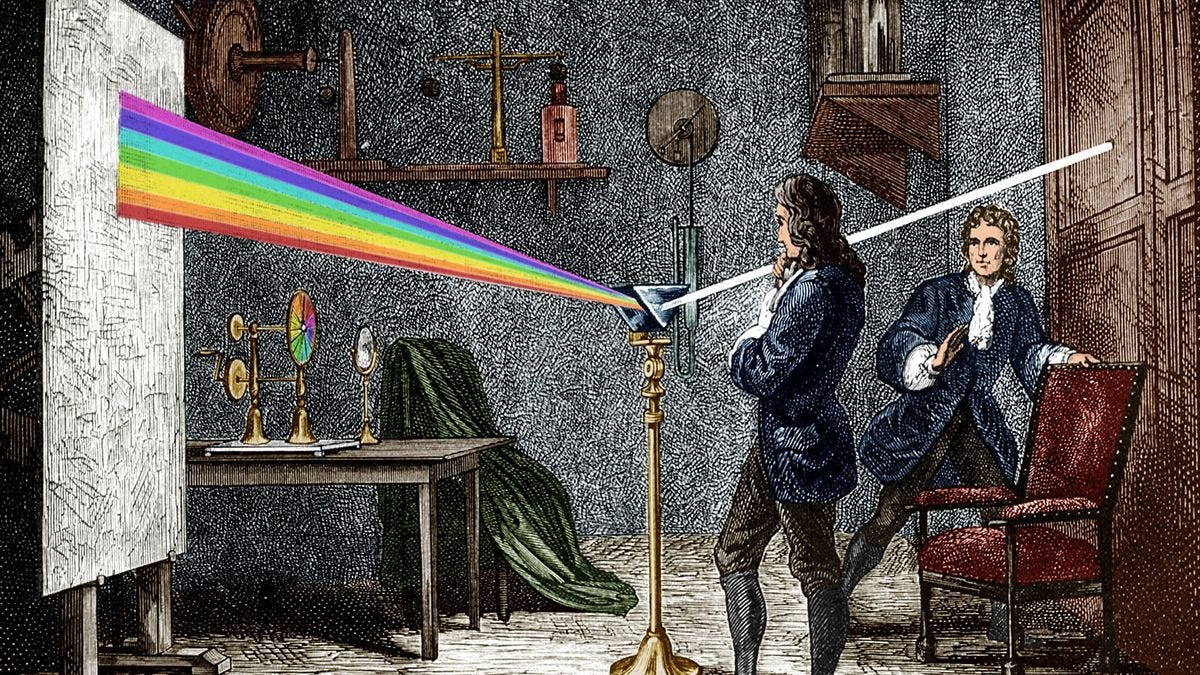
According to Newtonian theory of color, because the entire color spectrum is nested within white light, it follows logically that darkness is merely an absence of light. But to Goethe, grounded in sensual, viewable reality (where light frequently interacts with darkness), this could not be true: for while the human eye has the capacity to observe light, it can also observe darkness. Goethe describes this concept first and foremost in almost cosmological terms. “Next to light, a color appears which we call yellow, another appears next to darkness, which we name blue… this is the actual state of the generation of colors… we may observe that colors throughout are considered as half-lights or half-shadows”22. Goethe in both his creative and scientific pursuits, was fascinated by the interaction between light and darkness, be it literal or metaphorical. Of course, Faust, his greatest work, describes one such encounter.

Why is the sky blue? And why does it turn red, yellow, and orange at sunrise and sunset? Goethe’s answer to that question illustrates how this and all the colors we perceive are actually the phenomenological product of these dark-light interactions. Goethe knew that light and subsequently color is only visible when it comes into contact with something else, namely physical matter23. Goethe was also aware of the fact that the Earth’s atmosphere is not an empty vacuum, but is at all times pervaded with tiny, microscopic particles or dust, dirt, and moisture - what Goethe referred to as Trübe or ‘turbidity’. The air we breathe and through which we observe the world around us, is an inherently turbid medium.
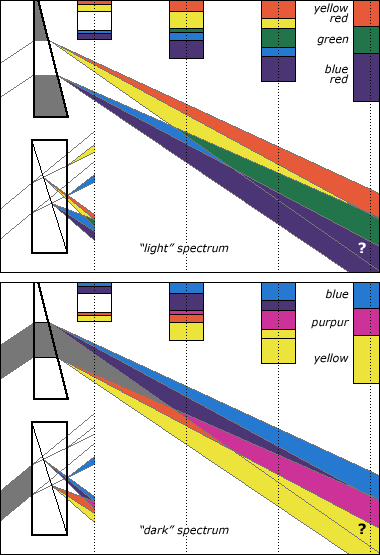
Against light, Trübe appears yellow, but against darkness, it appears blue - Goethe’s two fundamental colors. “When we look at the darkness through the illuminated Trübe, we see the blues… blue is illuminated darkness… the blues are born out of the darkness with the help of light… when we look at the shining sun in the Trübe, we see it as yellow and red… yellow and red are darkened light… the yellows are born out of the light with the help of darkness”24.
Polarity:
Central to Goethe’s understanding of natural phenomena, as well as perhaps the underlying force in his fictional works, is his idiosyncratic theory of polarity. Polarity represents the epitome of Goethean science, for it is both underlying philosophy and method. It is a difficult subject to address despite its pervasiveness in his works, since Goethe himself never directly described it at any point. From Goethe, the closest we get is in a purely referential, seemingly passing capacity in Theory of Colors: “from the rudest mechanical friction of very different substances to one another, to the mere contiguity of two entirely similar bodies, the phenomenon [color theory, ergo light-dark interaction] is present and stirring, nay, striking and powerful, and so decided and specific, that when we employ the terms or formulæ of polarity, plus and minus, for north and south, for glass and resin, we do so justifiably and in conformity with nature”25.
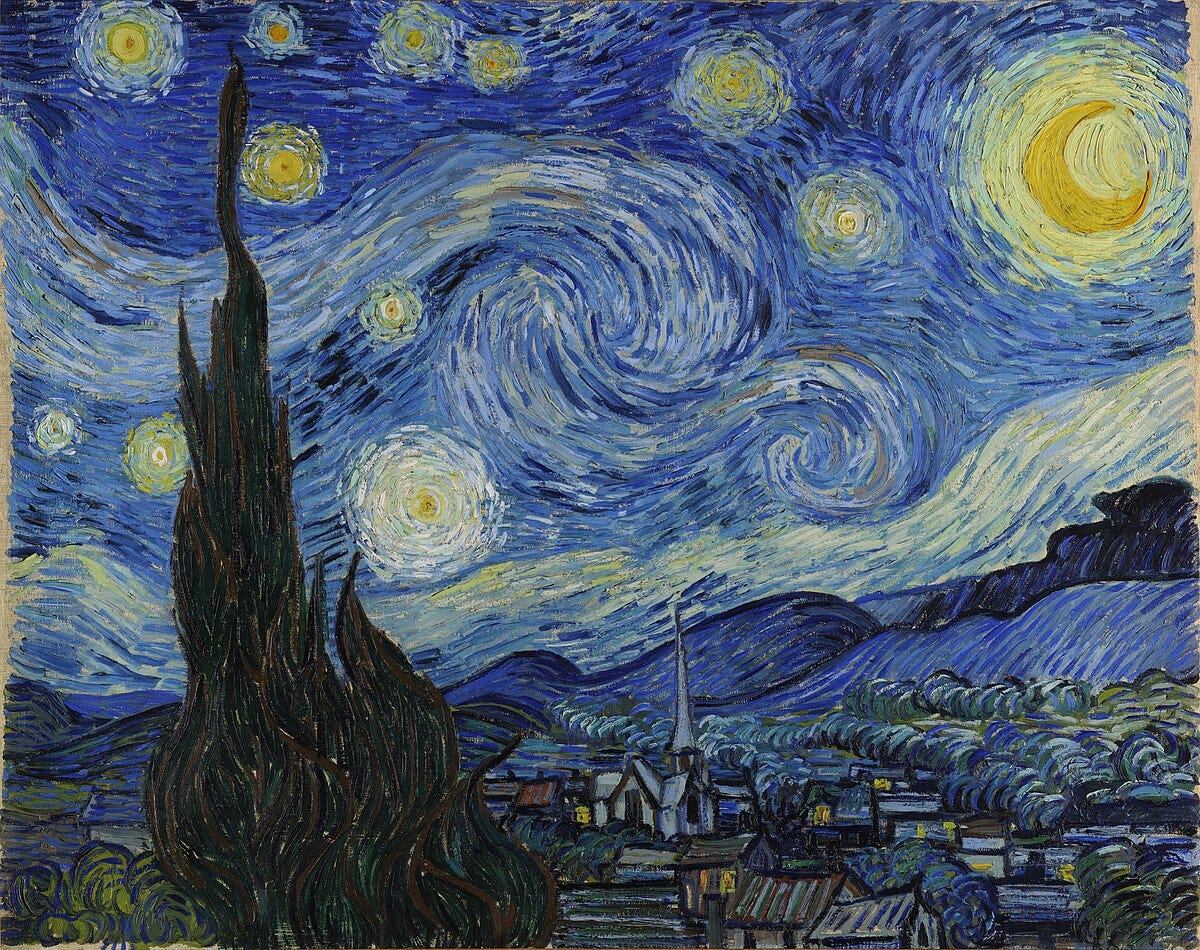
Rudolf Steiner26, before his decent from the mainstream into weirdo occultism was a highly respected Goethe scholar, having been invited to work at Goethe Archives in Weimar as a young man. Steiner wrote extensively on the subject on the subject of Goethean Science. “Polarity”, according to Steiner, “inheres in the natural phenomena of Nature in so far as we think of them in the material sense. It consists in this: everything of a material nature expresses itself in two opposites, the magnet in a north and south pole. These states of matter are either apparent to the eye, or lie latent within the material and can be roused into activity by appropriate means… [intensification27] it can be observed in nature processes which fall within the scope of the idea of development. At the different stages of development these processes manifest the idea underlying them with greater or less distinctness in their external appearance. The idea cognized by the mind and the perception do not resemble each other”28.
In his study of plant life, Goethe saw polarity in anastomosis: the interaction, conflict, and unity between individual organs. In Metamorphosis of Plants, Goethe observed similar patterns in the lifecycle-phases of various plants. In considering the similarities and differences between species, he defined inflection points that he claimed applied to all plant life cycles, which Miller paraphrases as: “1. Expansion of the seed into stem leaves, 2. Contraction from stem leaves into the sepals of the calyx, 3. Expansion from sepals into petals, 4. Contraction from petals into pistil and stamens, 5. Expansion from reproductive organs into fruit, and, completeing the cycle 6. contraction from fruit into seed”29.
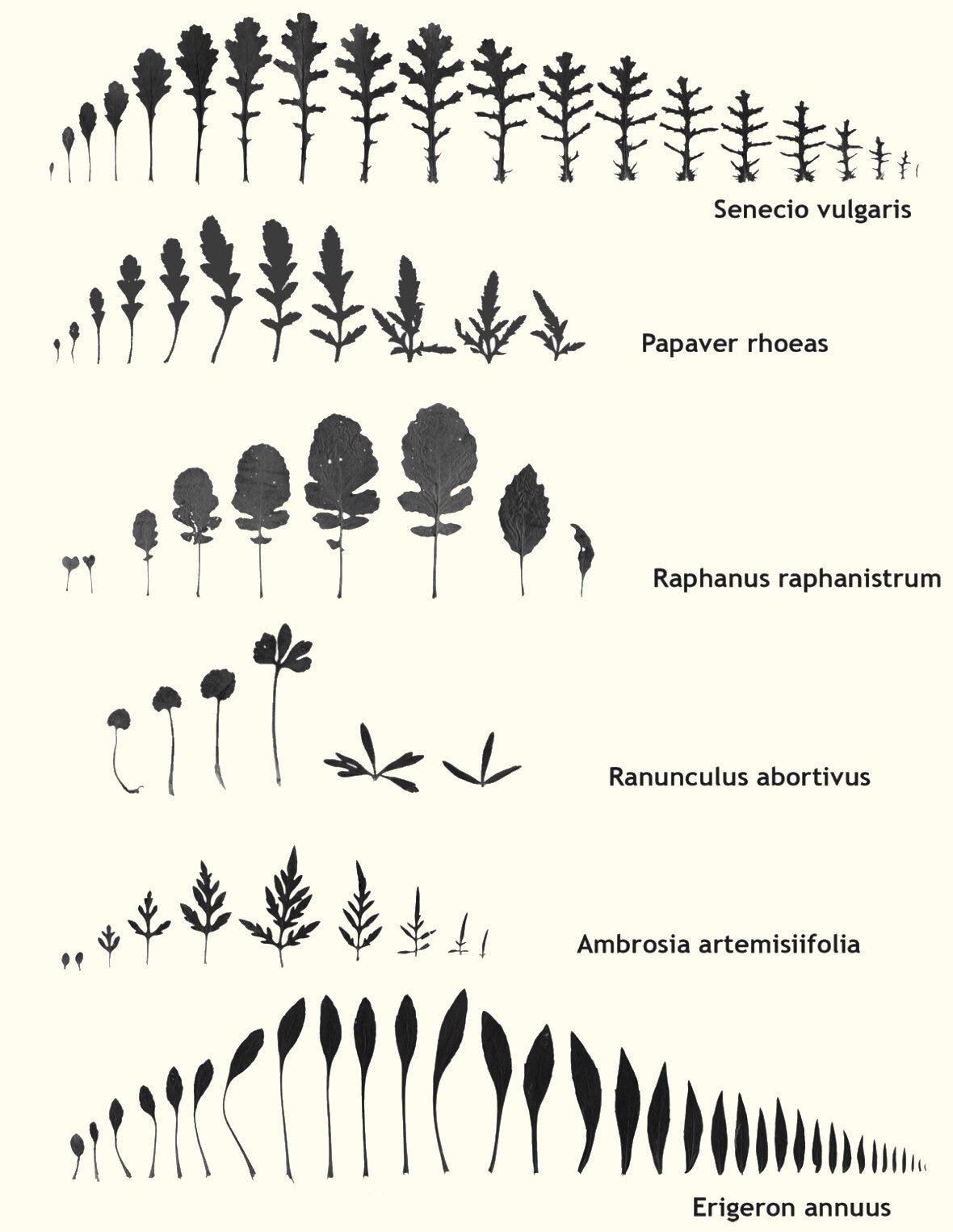
To Goethe, anastomosis, an observable manifestation polarity, represents a broader transformation (demonstrated in the life cycles of living beings) that is both material and spiritual in nature - a microcosm of the greater natural system and its laws, the universal truth which governs all that is both physical and metaphysical. “Spirit and matter, soul and body, thought and extension… are the necessary twin ingredients of the universe, and will forever be”30, says Goethe.
Goethe’s approach towards morphology completely at odds with the modern study and theory of life, in which disciplines like botany and zoology are conceived as extensions and cellular biology. Instead of seeking out any basic building block of life in simple organisms like cells, Goethe sought out complex organisms. This, by the way, was not just because of the technical limitations of Eighteenth Century science. Over a century before Goethe or Linnaeus for that matter, Robert Hooke, and English optic pioneer, was credited with the first human observation of cellular activity. But to Goethe, it was in that higher forms of life (plants, animals, etc.) that the laws of nature could most fully express themselves31.
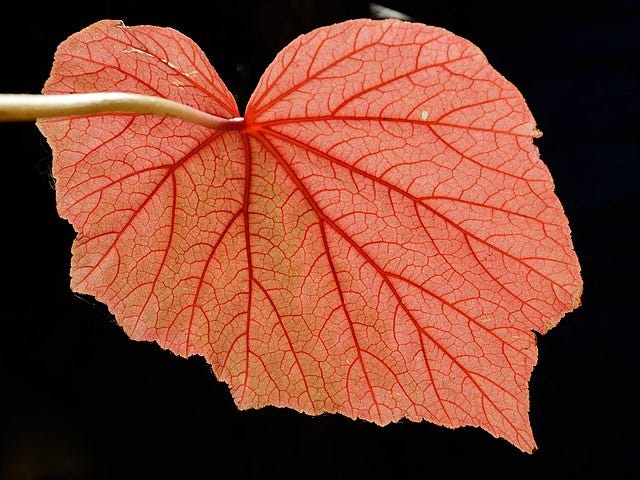
To Goethe, nature is almost like a painting - its not about the individual brushstrokes, shapes, forms, or colors, rather an artistic work is defined as the relationship between all of those elements. And that relationship - depending on the inclinations of the observer - could be interpreted as either one of concert or one of contradiction. Light and darkness, abstract and concrete, foreground and background, yellow and purple, red and blue, it is through such a dynamic tension of opposites that the artistic vision is realized.
Conclusion:
The contemporary importance of Goethe’s natural philosophy is not insomuch in its actual scientific value, which would indeed diminish considerably with the advance of modern physics. Goethe’s theory of light and color, for example, while extremely interesting, is unable to stand up to the rigorous demands of the scientific methodology and modern experimental standards, and has been conclusively debunked. The rest they have not bothered to approach, as Goethe’s theories so often veer off into the abstract and philosophical and are thus impossible (especially for the unimaginative, pedantic current in the modern sciences) to conclusively prove or disprove.
Rather, its significance - why we should care about it - lies in its spirit. Goethe, like many others of his day, firmly believed that they themselves were capable, at least as anyone else, of discovering life’s mysteries (both physical and metaphysical) through engagement with the natural world use only the most simple instruments. There is an accessible, youthful spontaneity in his efforts, tempered only by his deep reverence for for the beauty, complexity, and power of the natural world.
While modern science is capable of incredible, almost magical things, within them is a profound sense of alienation. This is not just the result of increasing mechanical/technical capacity and specialization, though it is true that very few have the ability to observe the workings, the experimental/observational basis of contemporary science. It is taken for granted, for example, that atoms are the basic building blocks of all matter, despite the fact that most people have never seen an atom, or that microscopic pictures of these minute, tiny specks look nothing like the bright, colorful models shown in chemistry class.
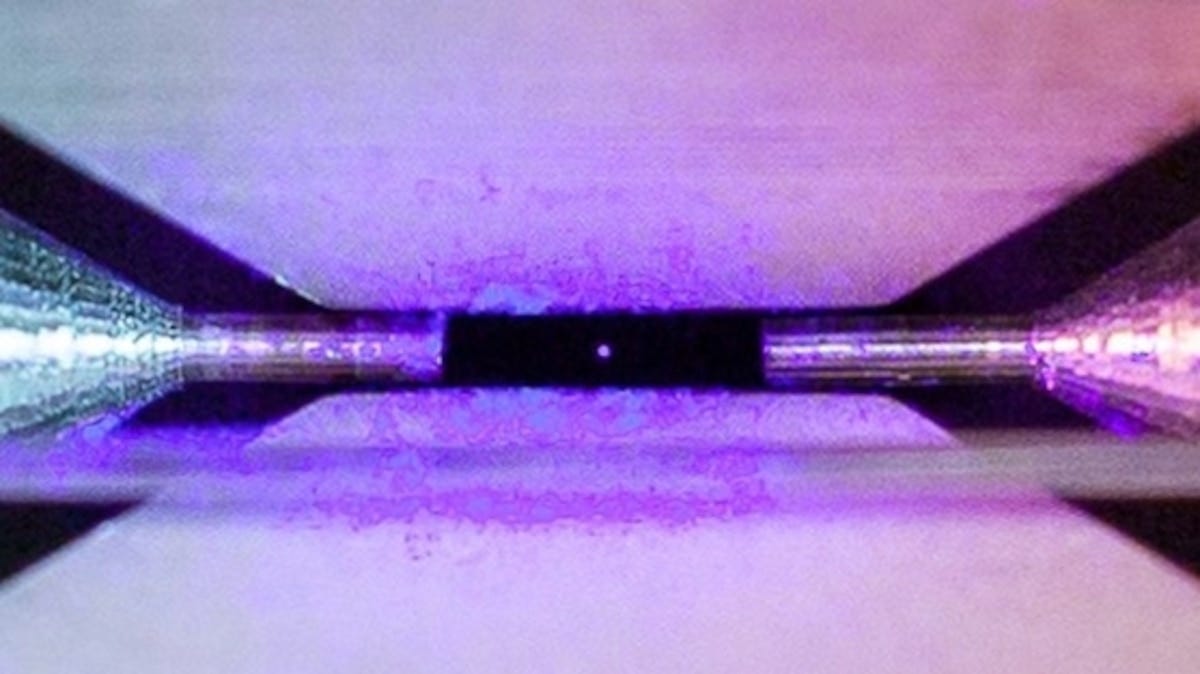
I, for one, am inclined to believe the scientists and their atomic theory. However, I also believe that when a normal person is told, especially by an authority figure, to believe something, to accept a proposition that is not immediately obvious to them, the resulting effect is one of alienation.
And education is not necessarily the answer. Scientific literacy is at an all time high, as is the belief in astrology32. Likewise, the decay of the Roman Empire was accompanied by a widespread abandoning of the old Roman pantheon in favor of other belief systems. Christianity was especially compelling to the urban poor because it spoke to them, connected with them, in a way that the old Gods simply could not or would not do. Meanwhile, the wealthy patricians, secluded within the comforting walls of their palatial villas and wanting for nothing, nevertheless turned to bizarre occultism and other related forms of hocus pocus - brilliant mosaics of the Egyptian Gods, for example, have been unearthed among the ruins of the finest aristocratic residences.
The point here is that when human beings - who as a species are always asking questions - are furnished with explanations that they find unsatisfying or unconvincing for whatever reason (either consciously or unconsciously), they will reject it in favor of something else, no matter how ridiculous or nonsensical they may seem. As far as most people today are concerned, there is little difference today between the hermetically sealed world of science and the reclusive, secretive class of high priests that once ruled over the most ancient societies. And likewise, when they are mistaken in their proscriptions - such as in the technocratic-led response to the recent pandemic - the masses are quick to turn on them, if not science, Enlightenment, itself.
The root of the problem, as far as I can tell, is the fact that the sciences have retreated steadily from the realm of metaphysics. And yet metaphysics, for the vast, vast, majority of human history, has been the most basic foundation, if not the lens by which human beings make sense of the world around them. Its not that the science is wrong, but rather its that the science is not asking the right questions. While our modern science can confidently say, for example, how many molecules exist in a strand of DNA or the precise weight of a mole of palladium, it is completely silent on the most human of questions - questions which earlier cosmologies, such as Hesiod in antiquity or Genesis in the Bible, despite their limitations, made respectable attempts to answer. Is there such thing as free will? What happens to people when they die? Or even a question presumably more manageable such as: What is the essence of life? What is the essence of living? Scientists are human beings, yet to all of these very reasonable questions, science does not dignify with comment - either out of indifference or a self-conscious realization of its own limitations and that of materialism, which it has long sworn by. Meanwhile, I can safely say that I have never been kept up at night by questions like “what are the ideal dimensions of an archaeological sample square?”.
A considerable exception to this is to be found, of course, in the field of quantum physics. I would argue that, at its highest level, quantum physics is virtually indistinguishable from philosophy. In regards to many of the most important existential questions, quantum physics is hardly neutral. And its treatment of space, time, the relationship between the two, the nature of observation, is strikingly natural-philosophical - the profundity of its conclusions, its axioms, hardly needs any introduction, for they are so immediately compelling. It is in Einstein’s Theory of Relativity, filled with illustrative metaphors33 and expressed in elegant mathematical, logical forms, that we see the development of a true, perhaps conclusive metaphysic. However, this spirit of creativity is, among other scientific disciplines, the exception rather than the rule, and is sorely lacking in other fields in spite of their clearly recognized accomplishments.
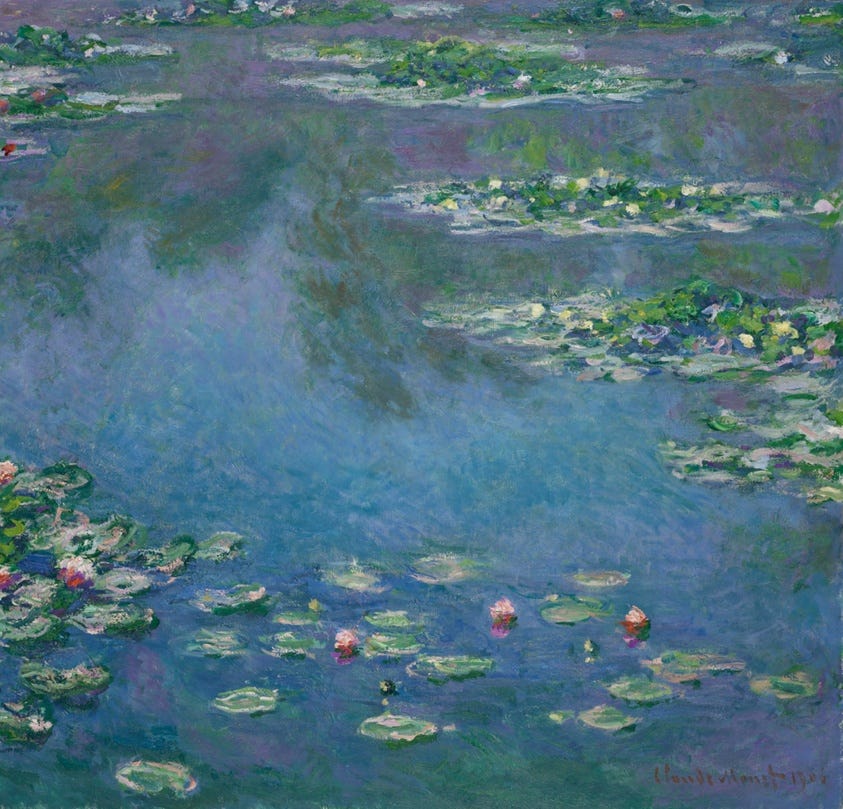
For me, the main takeaway here, is that Goethe sought in nature the things that were personally meaningful to him. Science, to him, was not to be pursued for its own sake, as it is now, but rather as a transcendental vehicle for self discovery and personal expression. As well as one with a clear purpose. It is time to reconnect with the natural world through the spirit of Goethean Science - to accept our place and find meaning in the beauty of living nature.
Goethe eventual came to hate Werther, to despise his creation in spite of the success it brought him, just as we often find ourselves embarrassed by our former selves and our past decisions. Goethe often imagined Werther as a ghost that would haunt him for his entire life. It would only be as an older, wiser person that Goethe would acknowledge its seminal importance on his development as an artist and reconcile himself with the follies of his own youth, as all of us eventual come to find.
As in Faust Part I, published in 1808, and Faust Part II, published posthumously in 1832. Considered one of the ultimate masterpieces of German literature, both, especially the later work, are the product of a mature artist. Goethe had been fascinated by the Faust legend for his entire life. Even before the composition and publication of Werther, a young Goethe had begun work on a Faust story - known as the Urfaust - but abandoned the project by 1775 for unknown reasons.
Ahmed, Waqad. The Polymath: Unlocking the Power of Human Versatility. 2018.
Von Goethe, J.W. The Sorrows of Young Werther. Tr. Boylan, R.D. 2009.
Von Goethe, J.W. Versuch die Metamorphose der Pflanzen zu erklären - lit. “An attempt to explain the metamorphis of plants”. Published 1790.
This was developed more concessively later in the Nineteenth Century by Richard Owen (a contemporary of Darwin) in such works as On the Nature of Limbs (1849) and Description of the Skeleton of the Extinct Gigantic Sloth (1842). Said “gigantic sloth” is now on public display at the Natural History Museum in London.
Von Goethe. The Sorrows of Young Werther.
Carl Linnaeus (1707-1778) and work on plants was one part of his larger project of taxonomy: the cataloguing, organization, and naming all known species of organic life. The form and convention of scientific names for plants, animals, and other organisms is Linnaeus’s chief contribution to biology. His work is considered one of the primary foundations of Darwin’s Theory of Evolution, since the taxonomical project (for example, the grouping of tigers and lions into the genus of Pantherinae - big cats) seemed to imply a sense of natural history and natural interrelatedness. The basis of Linnaeus’s classifications, however, were often superficial and arbitrary.
Von Goethe, J.W. Geschichte meines botanischen Studiums. Published 1817.
Koerner, Lisbet. “Goethe’s Botany: Lessons of a Feminine Science.” Isis 84, no. 3 (1993): 470–95. 477.
Haecker, Ryan. “The Urpflanze of Life”. December 18th 2020.
Gabór, Zemplén. “Form as Movement in Goethe’s ‘The Metamorphisis of Plants’. Technical University of Budapest.
Goethe, like any Eighteen Century intellectual, was greatly influenced by Kant, especially through his friend and fellow poet Friedrich Schiller (1759-1805). But do not mistake influence for inspiration.
His choice of the word ‘Maxim’, which figures heavily in Kant’s work, could be interpreted as ironic.
Von Goethe, J.W. Maxims and Reflections. Tr. Saunders. 1906. Macmillan, New York.
Newton, Isaac. Opticks: or a Treatise on the Reflexions, Refractions, Inflexions and Colours of Light. Published 1704.
Wahl, Daniel Christian. “Zarte Empirie”: Goethean Science as a Way of Knowing. February 12 2017.
Von Goethe, J.W. Zur Farbenlehre. 1810.
Schopenhauer, Arthur. Über das Sehn und die Farben. 1816.
Goethe. 2-3.
Ibid. 310.
Ibid. 43.
Both Goethean and Newtonian optical theories are in agreement on this specific point, though for very different reasons. According to Newton, a ray of white (pure) light produces color through refraction, split apart by something in its way. But for Goethe, color comes from the interaction that occurs when a white (pure) beam of light collides with a physical, presumably unlit object, which changes our perception of this light into something different - since, as explained, how we perceive color is context dependent.
“Light, Darkness, and Colors - Goethe’s Theory of Colors Explored”. Boëtus, Henrik. Lauridsen, Marie Louis. Lefèvre, Marie Louis. Magic Hour Films. 1998.
Goethe. 296.
Rudolf Steiner (1861-1925), known today mostly for his alternative schools, also had plenty of his own ideas, which ranged from slightly eccentric to absolutely bizarre. For example, Steiner claimed to possess supernatural and telepathic abilities, as well as his belief in lost ‘Atlantian’ and ‘Lemurian’. Nevertheless, his extensive study and analysis of Goethe can be taken seriously, provided, of course it is approached with the proper, cautious attitude. In any case, Goethean science is less a matter of fact and argument, but rather one of descriptive conceptualization - describing things (phenomena) that have already happened or are reasonably known/perceived to happen. Jung, for his part, believed that Steiner was “schizophrenic”.
Intensification can be interpreted as the evolving legibility of polarity within a given organism. Unlike polarity, in the case of intensification Goethe did directly attach a more succinct definition: “a state of ever striving ascent” towards what Miller refers to as “the fullest possible expression in physical, empirical phenomena of the potential inherent in the underlying idea or Urphenomenon”.
Steiner, Rudolf. Goethe’s Conception of the World (Goethes Weltanschaung). Chapter 6: “The Metamorphosis of Phenomena”. 1897.
Miller, Gordon L. Introduction and Photography to Metamorphosis of Plants. 2009. MIT University Press.
Goethe to Karl Ludwig von Knebel (8 August 1812). Quoted in Introduction to Metamorphosis of Plants, Gordon L. Miller. 2009.
This, by the way, is one of the ways in with Goethean worldview could be said to foreshadow Hegel, who belonged to the following intellectual generation.
I myself do not believe in astrology, mainly because I am a Scorpio and we are stubborn.
My favorite of which, is his comment that if you were in a trolley traveling at the speed of light and looked out of the trolley window onto a clock tower outside, it’s hands would not move because time would not be passing.